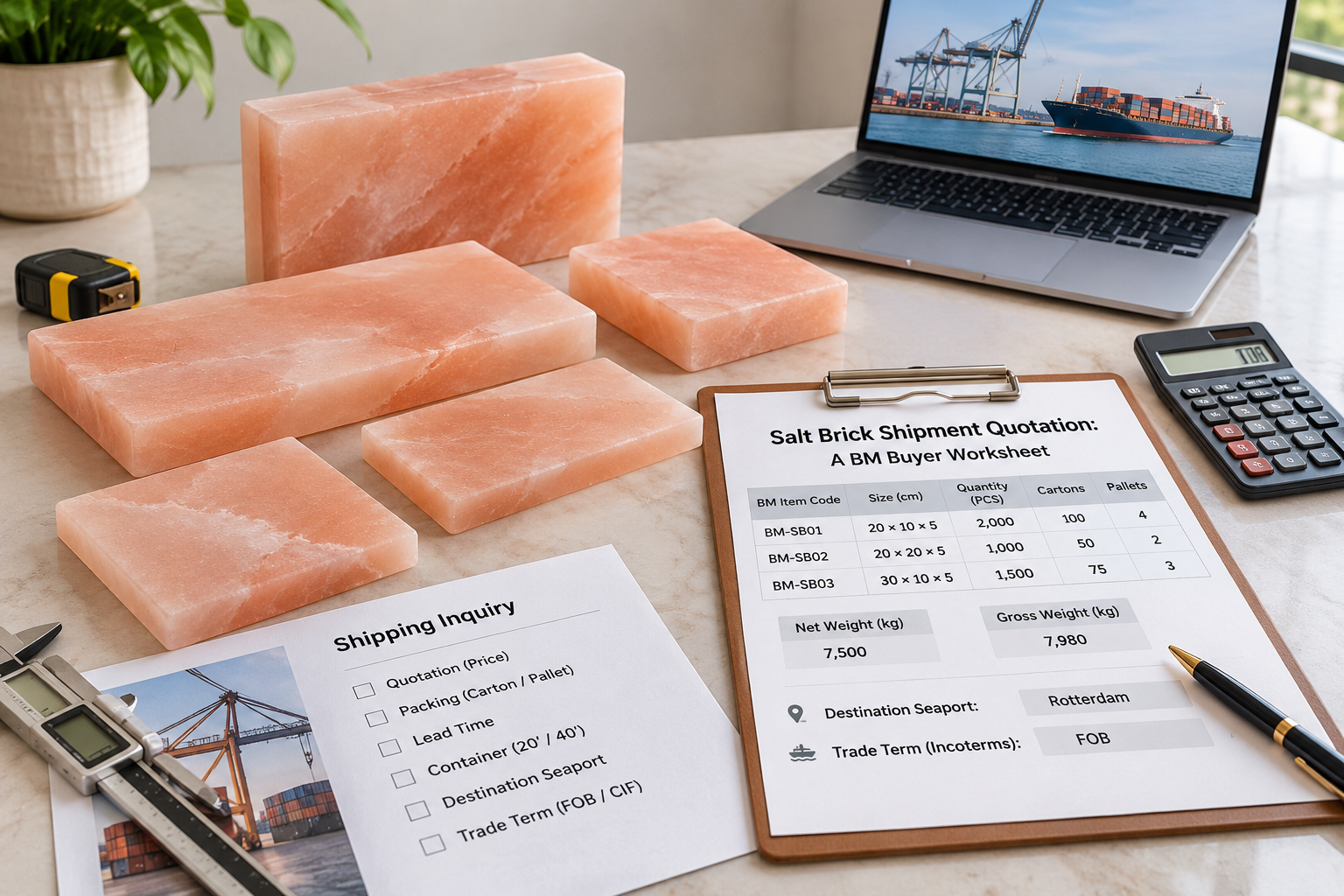
A mixed salt-brick order needs more than a single total quantity. The quotation should identify the chosen products, the quantity basis and the packing details still awaiting confirmation. Use this worksheet to keep those decisions together before asking for freight pricing.
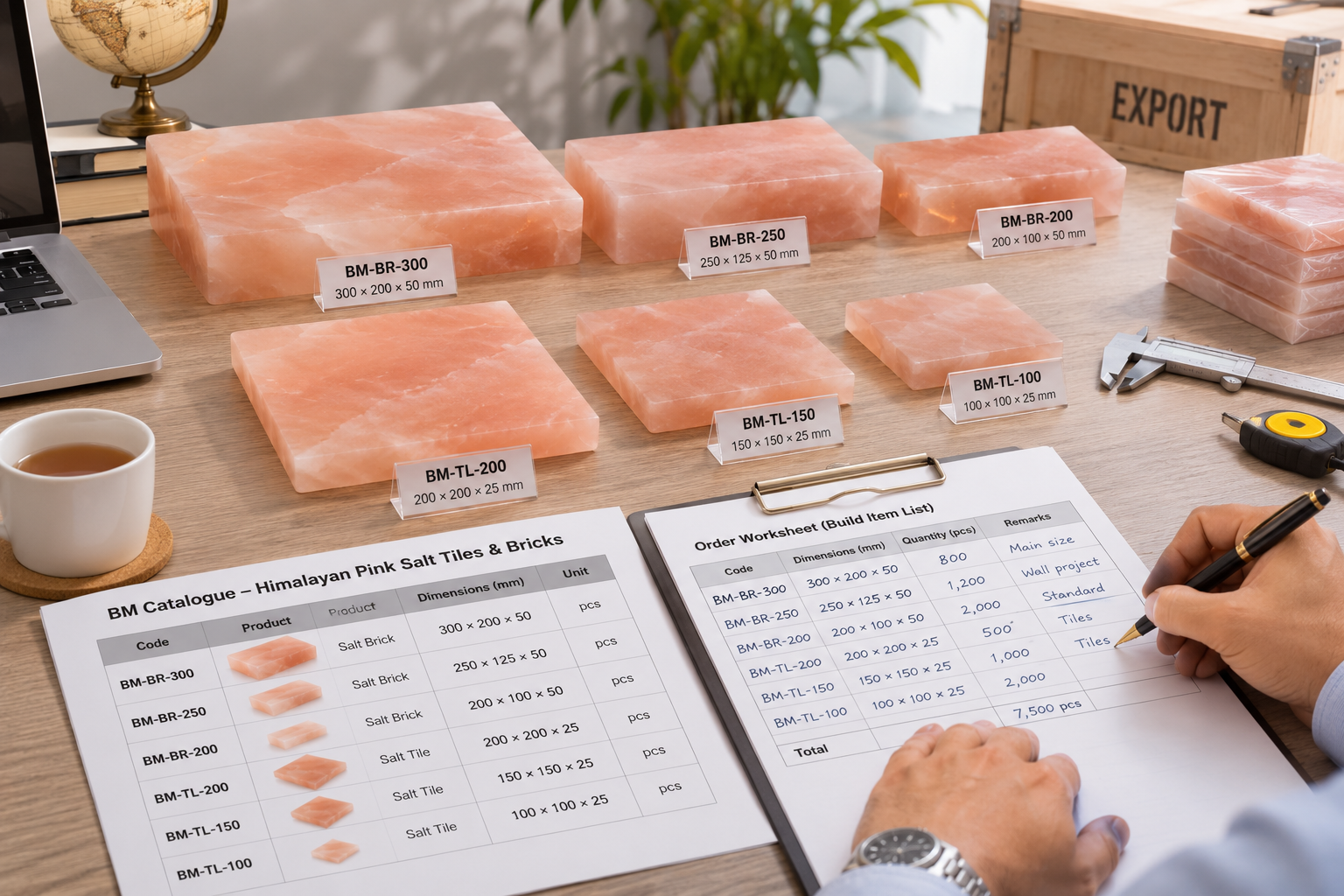
1. Build your item list from the BM catalogue
Choose the exact codes from our salt brick and tile catalogue. Copy the published description, dimensions or weight range beside each code. Keep different sizes and finishes on separate lines, even if they will be shipped together.
For products ordered by pieces, state the required piece count. For wall stones, identify the selected weight range and required total weight. Avoid combining piece counts and weight-based quantities into an unlabeled total.
2. Separate the inquiry from confirmed packing
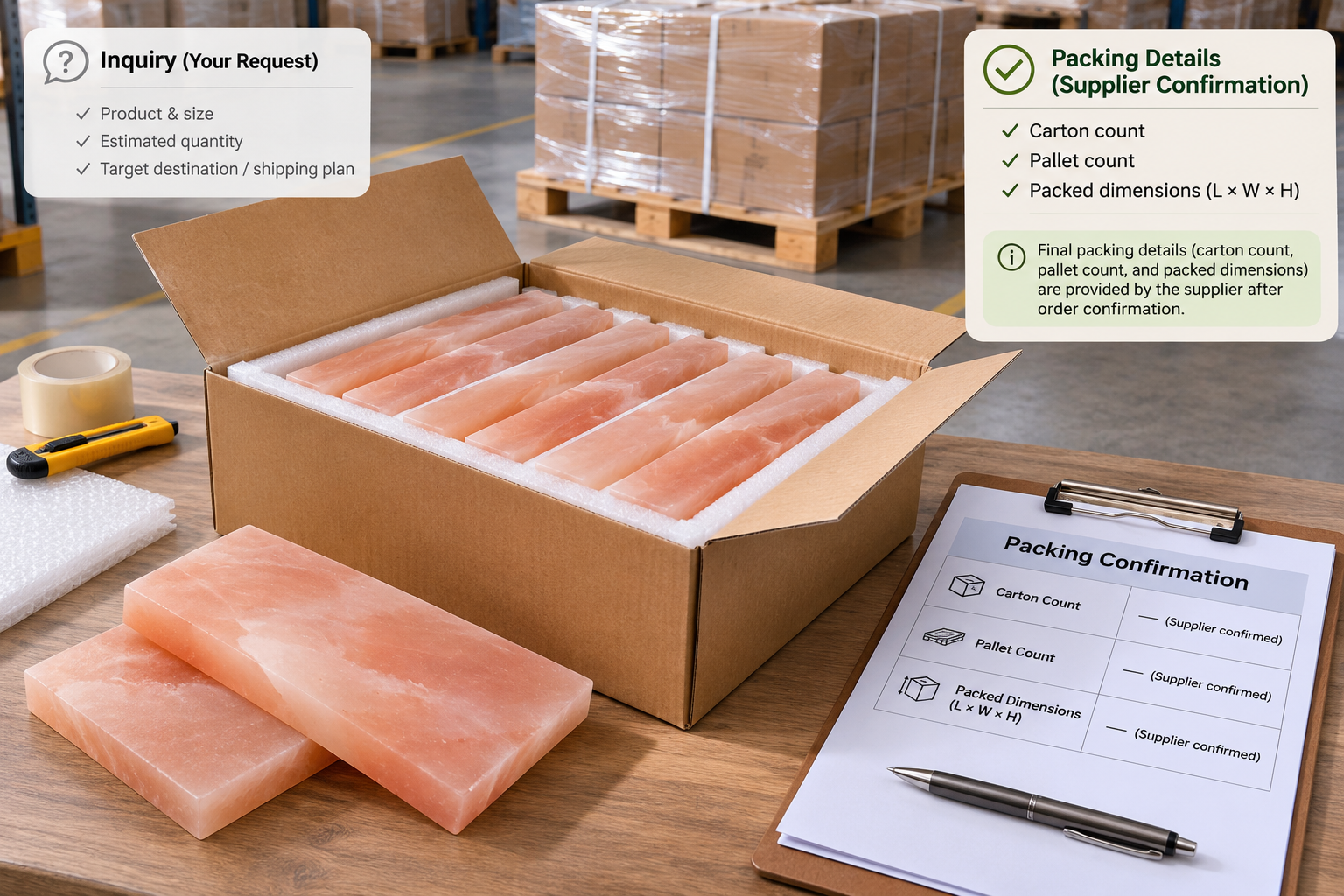
Your initial quantity is a request. Carton count, pallet count and packed measurements are supplier-confirmation fields. Leave unknown values marked “Confirm on request” rather than estimating them from the product photograph or unit dimensions.
Ask how the proposed assortment will be grouped and protected, and whether the packing response covers every item on your list. A change in quantity, product mix or protection may require a revised packing plan.
3. Ask for net and gross figures separately
Request the stated basis for each weight: product weight, packed carton weight or complete pallet gross weight. Ask for the external packed dimensions and their units. These are different fields; a catalogue unit weight does not establish the weight of the finished shipment.
Do not treat a calculation from tile dimensions as a guaranteed pallet or container load. Obtain the actual proposed packing figures before relying on a freight quotation.

4. Provide the destination and quotation scope
Include your destination seaport and the requested delivery or trade term. If you have a preferred container type or shipment arrangement, describe it as a requirement for review. Ask the supplier to confirm the quotation’s scope, packing assumptions and any outstanding information. Review the published company policies; a requested term is not automatically an accepted service.
A packing list helps identify what is packed and how it is grouped. Carrier documentation guidance provides general background; the documents needed for your order depend on its actual shipment requirements.
Copy this shipment quotation worksheet
- BM item code and catalogue description, one line per item:
- Quantity and unit for each code:
- Required protective packing or handling requests:
- Carton count and packing arrangement: confirm on request.
- Pallet count and external dimensions: confirm on request.
- Net and gross weights, with units and basis: confirm on request.
- Destination seaport:
- Requested trade term and container/shipment preference:
- Required shipment documents:
- Outstanding points and packing-plan revision/date:
Check the response before accepting the quote
Match the response to every BM code and quantity. Check which packing values are confirmed and which remain provisional. If you change the assortment, ask whether the packing and freight figures need to be updated. Retain the agreed version with your order specification.
Request a salt-brick shipment quotation and paste your completed worksheet into the inquiry message. The worksheet records questions for confirmation; it does not promise fixed loads, packing weights or freight charges.